

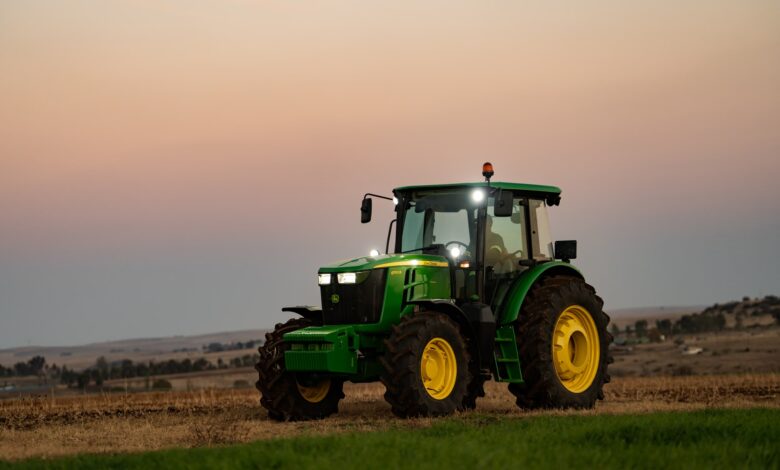
Agriculture has evolved significantly over the years due to technological advancements. Modern agricultural equipment helps farmers increase productivity, reduce labor, and improve efficiency in food production. Today’s farms rely on advanced machinery, automation, and smart technologies to manage crops and livestock more effectively.
1. Tractors – The Backbone of Modern Farming
John Deere 8R Tractor
Kubota M7 Tractor
Tractors are the most essential machines used in agriculture. They perform multiple tasks such as plowing, planting, hauling, and operating other farm implements. Modern tractors now include GPS guidance, automated steering, and real-time data monitoring, helping farmers work more efficiently and reduce fuel consumption.
Advanced tractors can even operate semi-autonomously, allowing farmers to manage large fields with minimal manual labor.
2. Combine Harvesters
CLAAS LEXION 8900 Combine Harvester
New Holland CR10.90 Combine
Combine harvesters are machines used to harvest crops such as wheat, maize, rice, and barley. They combine several operations—reaping, threshing, and cleaning grains—into a single process, saving time and labor. Modern combines use sensors and AI systems to reduce grain loss and improve harvest quality.
3. Planters and Seeders
Planters and seed drills are used for planting seeds at the correct depth and spacing. Precision planting machines ensure that seeds are distributed evenly, which improves germination and crop yield. Many modern planters are connected to GPS systems that allow variable-rate seeding, adjusting seed quantity depending on soil conditions.
4. Irrigation Systems
Modern irrigation equipment ensures crops receive the right amount of water. Examples include:
- Drip irrigation systems
- Sprinkler irrigation
- Center pivot irrigation systems
Some systems use sensors that monitor soil moisture and automatically adjust water delivery to reduce waste and improve crop growth.
5. Crop Sprayers
Sprayers are used to apply fertilizers, herbicides, and pesticides to crops. New smart sprayers use AI vision systems to detect weeds and spray only where needed, reducing chemical usage and protecting the environment.
6. Agricultural Drones
Agricultural drones are becoming popular for:
- Crop monitoring
- Aerial mapping
- Fertilizer and pesticide spraying
- Detecting plant diseases
These drones provide farmers with detailed data about crop health, helping them make better farming decisions.
7. Autonomous Farm Machines and Robots
The latest innovation in agriculture is the use of autonomous tractors and robotic machines. These machines use sensors, cameras, and artificial intelligence to perform tasks such as planting, weeding, and harvesting without human operators.
Robotic weeders and automated harvesters are helping farmers reduce labor costs and increase efficiency.
Conclusion
Modern agricultural equipment has transformed farming into a more efficient, data-driven industry. Technologies such as GPS-guided tractors, precision planters, drones, and autonomous machines are helping farmers produce more food while conserving resources. As innovation continues, the future of agriculture will become even more automated, sustainable, and productive.
